


One of the most common questions business owners ask before launching their digital project is: How much does it cost to design a website for a company?
You might receive a quote at a relatively low price, only to find that another agency is charging several times that amount for a website that, at first glance, appears similar. The reason is that the cost of a website isn’t determined by the number of pages alone, but by a wide range of factors, including design, programming, required features, content, search engine optimization, integration with external systems, and the level of post-launch support.
Therefore, the more precise question is not just, «How much does the website cost?», but rather:
What kind of website does my project need, and what should the budget include to ensure the project achieves the company's goals?
In this guide, we explain the key factors that determine the cost of designing a professional website, how to compare quotes, and where it’s worth investing your budget.
Is there a fixed price for website design?
There is no single price that applies to all locations.
A one-page introductory website for a startup is radically different from a website for a large company that offers dozens of services, branches, and languages, and both are different from an online store that requires payment processing, shipping, and product and order management.
Similarly, an online platform built specifically for managing reservations, customers, or service providers requires a completely different level of analysis, programming, and testing.
A website can be thought of as a digital project with a specific scope of work. The more demanding the scope, the more time is required for design, development, and testing, and consequently, the higher the cost.
What is the average cost of designing a website for a company?
The cost depends primarily on the type of project.
In RahybFor example, the Basic Plan currently starts at 2,500 Saudi riyals For a one-page informational website, including a professional, responsive design, one language, and basic SEO optimization, with hosting and a domain name as specified in the package details.
However, this price does not mean that all corporate websites can be developed on the same budget.
If the project requires additional pages, two languages, a more customized design, content writing, or advanced features, the scope of work changes and, consequently, so does the cost.
Private stores and platforms, on the other hand, typically require a larger budget due to additional features related to products, payments, orders, users, and integration with third-party services.
Key Factors That Determine the Cost of Website Design
1. Type of Website
This is the first and most significant factor affecting the budget.
Projects can generally be divided into several types:
About Us:
Its purpose is to introduce the company, its services, its business, and its contact information.
Corporate Website:
It is larger than a traditional informational website and may include several sections, subsections, services, landing pages, and a content hub.
Online Store:
It includes modules for products, shopping carts, orders, payments, shipping, customers, coupons, and reports.
Booking Website:
It needs to manage appointments or reservations, availability, prices, and possibly payments.
Dedicated Platform:
Such as real estate, education, or membership platforms, service providers, or internal systems, which often require custom development.
Each type has a different level of complexity, which is why it is not appropriate to compare the price of a basic website with that of a full-featured store or platform.
2. Number of pages
Every page requires content planning, design, development, and testing.
The website consists of:
- Home
- Who we are
- Services
- Our Work
- Blog
- Contact us
It won't require the same amount of effort as a website with twenty or thirty separate pages.
However, the number of pages alone is not enough to determine the cost.
You might have ten pages that all use the same design template, while there is one more complex page that requires filtering, maps, forms, a database connection, and custom interactions.
Therefore, it is best to evaluate Page Types and Complexity And it's not just the number.
3. Should I use a ready-made template or a custom design?
One reason for the variation in web design prices is the method used to build the interface.
Template-Based Design
A ready-made template is selected and then customized to match the company's brand identity and content.
This approach may be suitable for small projects when the budget is limited and the requirements are simple.
Custom Design
The project begins with an analysis of the company's goals, its target audience, and the user experience; the interfaces are then designed to align with the brand identity and the required functionality.
A custom design takes more time, but it gives the project greater flexibility and a better ability to deliver an experience that fits the brand, rather than forcing the brand to adapt to the limitations of a template.
4. UI/UX Design Level
A professional website isn't just about appearance.
A designer should know:
What does the visitor want?
What information is he looking for?
What is the next step we want him to take?
Is the purpose to request a quote?
Or make a call?
Or buy a product?
Or should I make an appointment?
Creating a clear user flow requires analyzing and organizing content, elements, buttons, and forms.
The more a project relies on converting visitors into customers, the more important the user experience becomes in terms of the budget.
5. Programming and Required Functions
There is a big difference between a page that displays text and images and a page that performs actual operations.
Some features that may increase the cost of the website include:
- User Registration.
- Customer Accounts.
- Advanced Search.
- Filters.
- Reservation System.
- Electronic payment.
- Order Management.
- Subscriptions.
- Maps.
- Multiple branches.
- Create quotes.
- Upload files.
- Custom control panels.
- Notifications.
- Membership Systems.
- Integration with external services.
Every feature needs to be developed, tested, and verified to ensure that it works correctly on various devices and in various scenarios.
6. Is the website in one language or multilingual?
Creating a website in Arabic and English is more than just adding a button to switch languages.
Arabic is written from right to left, while English is written from left to right, so you must ensure that the design works well in both directions.
Content must also be localized for each language, and page titles, descriptions, links, and SEO structure must be optimized for the different versions.
The project may also require separate content management for each language.
That is why a multilingual website is usually more expensive than a single-language website.
7. Content Writing
A common mistake is to assume that design alone is enough.
The website needs content that explains:
Who are you?
What do you offer?
Who do you provide your services to?
Why would a customer choose you?
How does he benefit from your service?
What step should he take after reading the page?
If the company doesn't have any content ready, it may need a website content writing service.
Professional writing doesn't mean filling pages with words; rather, it means crafting a clear message that helps visitors and search engines understand the company's business.
8. Search Engine Optimization (SEO)
If the goal of the website is to attract customers from Google, you should consider SEO from the development stage, not after the website goes live.
Basic preparation may include:
- Link Structure.
- Page Titles.
- Meta Description.
- H1, H2, and H3 headings.
- Website speed.
- Phone compatibility.
- Compress images.
- Internal links.
- Sitemap.
- Crawlability and indexability.
- Structured data as needed.
- Optimize service pages for relevant keywords.
Larger SEO projects, on the other hand, may include keyword research, competitor analysis, content strategy, the creation of landing pages and articles, and ongoing technical optimizations.
Therefore, when comparing web design proposals, you should make sure to check the level of SEO included in each proposal.
9. Online Store and Number of Products
The store consists of more than just a home page and a product page.
There is an entire system that may include:
- Products.
- Categories.
- Attributes and Variables.
- Inventory.
- Prices.
- Discounts.
- The basket.
- Order Complete.
- Customer Account.
- Payment.
- Shipping.
- Taxes.
- Order Forms.
- Reports.
Furthermore, adding ten products is different from setting up a store with hundreds or thousands of products.
That is why you must determine who will be responsible for entering the products, whether the data is ready, and whether the products have options such as colors and sizes, before determining the cost of the store.
10. Payment Gateways
If a website or online store accepts online payments, it must be linked to a payment method that is appropriate for the target market.
The project may require:
- Payment cards.
- Apple Pay.
- Digital wallets.
- Bank transfer.
- Buy Now, Pay Later Services.
- Local payment gateways.
The connection method and costs may vary depending on the platform, service provider, and country.
11. Shipping and Delivery
For online stores, the project may need to calculate shipping based on:
- The city.
- The State.
- Weight.
- Order amount.
- Product Type.
- Shipping Company.
The company may need to integrate directly with a shipping provider to automatically generate shipments or tracking numbers.
The higher the level of automation required, the more complex the project becomes.
12. Integration with Other Systems
Some companies don't just want a standalone website; they need to integrate it with existing systems.
Examples of this include:
- CRM.
- ERP.
- Accounting Systems.
- Marketing platforms.
- Email Services.
- Inventory Systems.
- Customer Service Tools.
- WhatsApp.
- Reservation Systems.
- APIs.
These integrations may be simple in some cases and very complex in others; therefore, they must be defined at the outset of the project.
13. Website Speed and Performance
Good performance doesn't always happen on its own.
There are several factors that affect speed, including:
- Hosting quality.
- Image size.
- Codes.
- Extras.
- Lines.
- JavaScript and CSS files.
- Cash.
- Database.
- Foreign Services.
If a website aims to compete in search results or receives a large number of visitors, it is important to dedicate part of the project to improving performance rather than treating it as an afterthought.
14. Phone Compatibility
A large proportion of visitors access websites from their phones, so the design of the mobile version should not be an afterthought.
Responsive design means that:
- The text is legible.
- The menus are easy to use.
- The buttons are clickable.
- The images display correctly.
- The forms are easy to fill out.
- The elements do not overlap.
- The navigation is clear.
- The page doesn't become unnecessarily slow.
Testing these details takes time, and it is an essential part of building a professional website.
15. Web Hosting and Domain Name
There are costs that must be distinguished from the cost of the website design itself.
Domain Name
It is the website address that the user types in to reach you.
Hosting
This is the environment where the website files and database are located.
Hosting prices vary depending on resources, performance, security, support, and traffic volume.
Some web design packages may include hosting and a domain name for a specific period, while other providers bill for these separately.
So always ask:
Is hosting included?
Is the domain included?
How much will the renovation cost?
16. Maintenance and Technical Support
Launching the website is not the end of the project.
Especially for websites that use content management systems such as WordPress, you'll need to keep up with updates, backups, security, and performance.
Maintenance may include:
- System update.
- Update plugins.
- Update the template.
- Backup.
- Fault Monitoring.
- Troubleshooting technical issues.
- Improve speed.
- Content revisions.
- Security Monitoring.
Some design firms offer a support period after delivery, while ongoing services require a separate maintenance contract.
Why do you find one offer for 2,500 riyals and another for 20,000 riyals?
At first glance, the two offers may seem similar because they both are titled «Corporate Website Design.».
But the real difference often lies in the details.
The initial presentation may feature a simple website built using a pre-made template and consisting of a limited number of pages.
While the other may include:
- User Experience Study.
- Custom design.
- Content writing.
- Multiple pages.
- SEO Optimization.
- Two languages.
- Developing custom functions.
- External integrations.
- Advanced performance optimization.
- Tests.
- Training.
- Support and maintenance.
That's why you shouldn't just compare the final price.
Compare the scope of work item by item.
What expenses might be overlooked when creating a budget?
When planning your website, don't just factor in the cost of design and development.
Also keep in mind:
- Domain Renewal.
- Hosting Renewal.
- Paid licenses.
- Content writing.
- Photography.
- Translation.
- Maintenance.
- SEO.
- Creating articles.
- Advertising campaigns.
- Payment gateways.
- Foreign Services.
A website is an ongoing digital investment, not a project that is delivered once and then forgotten.
How do you determine the right budget for your company's website?
Start with the business goal, not the numbers.
Ask yourself:
What do I want the website to do for the company?
If the goal is simply to have an official online presence, a simple introductory website may be sufficient.
However, if you want to attract leads and customers from search engines, you'll need a stronger content strategy and SEO.
And if you want to sell directly, you'll need a store.
And if the business transactions themselves will take place on the website, you may need to develop a custom platform.
The closer a site is to the heart of the company's operations, the more important it is to invest in analysis, development, and maintenance.
What should a website design quote include?
Before accepting any offer, be sure to clarify the following points:
- Number of pages.
- Languages.
- Design.
- Content Management System.
- Required positions.
- Models.
- Enter content.
- Enter products, if any.
- SEO Optimization.
- Improve speed.
- Hosting.
- Scope.
- Email.
- SSL Certificates.
- Implementation period.
- Number of revision rounds.
- Post-delivery support.
- Maintenance.
- Ownership of the Website and Accounts.
The clearer the scope of work is, the less likely it is that unexpected costs or disputes will arise later on.
Do you choose the cheapest website design quote?
Not necessarily.
At the same time, a higher price does not automatically mean that the result will be better.
What needs to be evaluated is Value vs. Scope of Work.
Review the service provider's previous work, ask about how the project will be carried out, and make sure the proposal actually addresses your company's goals.
A low-priced listing that meets your needs could be an excellent choice.
However, a low-budget website that you'll need to rebuild after a few months may end up being the most expensive option in the long run.
How can you reduce website costs without sacrificing quality?
There are several smart ways to manage your budget.
Start with the basic version that the project actually needs.
You can launch the website with its most important pages and features, then add secondary features in later stages.
Prepare the content, images, and company information before starting the project.
Designate one person within the company to approve comments so that conflicting changes do not occur repeatedly.
Compile the required functions into a clear document before signing the agreement.
Provide examples of websites you like so the design team can understand the desired style.
Most importantly: Distinguish between what the project needs now and what it may need in the future.
When is a website considered a successful investment?
The value of a website is not measured by the number of pages or visual effects.
A successful website is one that helps a company achieve a clear goal.
It could be:
- Receive inquiries.
- Increase in calls.
- Generating sales opportunities.
- Selling products.
- Accepting reservations.
- Project Presentations.
- Building credibility.
- Reduce the number of frequently asked questions.
- Providing information to customers.
- Improve visibility in search results.
If the website consistently contributes to achieving these goals, the investment in it becomes measurable rather than being viewed merely as a design expense.
How long does it take to design a company website?
The duration depends on the size of the project, the readiness of the content, and how quickly the designs are approved.
Simple websites can be completed in a short period of time, while large websites, online stores, and custom platforms require more time due to the design, development, content creation, and testing phases.
It is best to agree on clear steps from the outset:
Requirements Gathering ← Interface Design ← Validation ← Development ← Content Addition ← Testing ← Launch
Having a clear course of action reduces delays and unplanned changes.
How can you get a more accurate estimate of your website's cost?
The best way to get an accurate price is to establish clear requirements before requesting a quote.
Select:
Website type, number of pages, languages, features, desired platform (if any), SEO requirements, integration with other systems, and whether the content and images are ready or need to be prepared.
That way, the design team can estimate the scope of the project rather than providing a general figure that might change later.
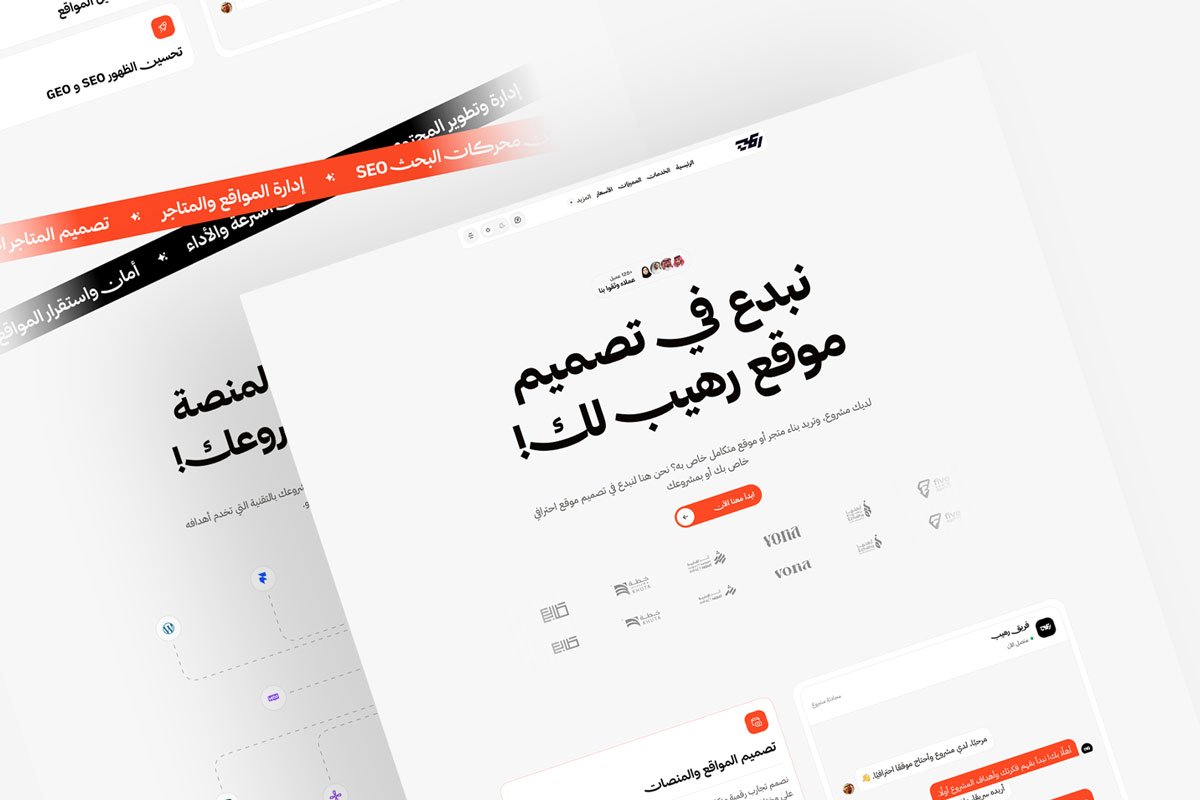
Design Your Company's Website with Rahib
In Rahyb We start by identifying the project's requirements and the goal the website is intended to achieve, and then we determine the appropriate design, pages, and features.
Whether you need a simple informational website, a full-featured corporate website, or an online store, defining your scope of work correctly from the start helps you invest in the elements your project actually needs, rather than paying for features you won’t use.
You can view the website design packages at Rahib or request a custom quote if your project's requirements go beyond the ready-made packages.
Frequently Asked Questions About Web Design Costs
How much does it cost to build a website for a company?
The cost varies depending on the type of website, the number of pages, the design, the languages, the features, SEO, hosting, and the required integrations. A simple informational website can be relatively inexpensive, while custom e-commerce sites and platforms require larger budgets due to their complexity.
Is designing an online store more expensive than creating a promotional website?
Most of the time, yes, because the store needs to manage products, shopping carts, orders, customers, payment methods, shipping, inventory, and other functions that aren't typically found on a simple informational website.
Does the cost of website design include hosting and a domain name?
This varies by company and plan. Some offers include hosting and a domain name for a specific period, while others charge for them separately. Be sure to check this in the price quote and the annual renewal cost.
Do I have to pay for website maintenance after it goes live?
The need for maintenance depends on the type of website and the technology used. Websites that include content management systems and plugins typically require regular updates, backups, and monitoring of security and performance.
Is SEO included in website design?
Some design services may include basic SEO setup, but ongoing search engine optimization, keyword research, content creation, and growth strategy development are typically a broader scope of services than basic website setup.
Does a multilingual website cost more?
Usually, yes, because it requires preparing content for each language, ensuring that the design is compatible with the conventions of different languages, and correctly setting up the pages, titles, and SEO structure.
How do I get an accurate quote?
Prepare a list of the required pages, languages, features, content, and integrations, and define the primary goal of the website. The clearer the requirements are, the more accurate the cost and timeline estimates will be.
Summary
The cost of designing a website for a company does not depend on a fixed amount, but rather on the scope of the project and what it requires to achieve its goals.
A simple informational website is different from a corporate website, an online store is different from a custom platform, and every additional feature, language, or integration affects the scope of work.
Therefore, before looking for the lowest price, determine what your project actually needs, and then compare web design proposals based on design, performance, functionality, SEO, support, and ownership—not just on the final price alone.
This way, your website budget becomes an investment in a digital asset that serves your company and grows with it, rather than simply being an expense for launching web pages.
Would you like to know the exact cost of your website? Request a quote from Rahyb Identify your project's needs, and we'll help you choose the right solution in terms of pages, features, and budget.